
What the War Memorial Forced Me to Confront About Courage
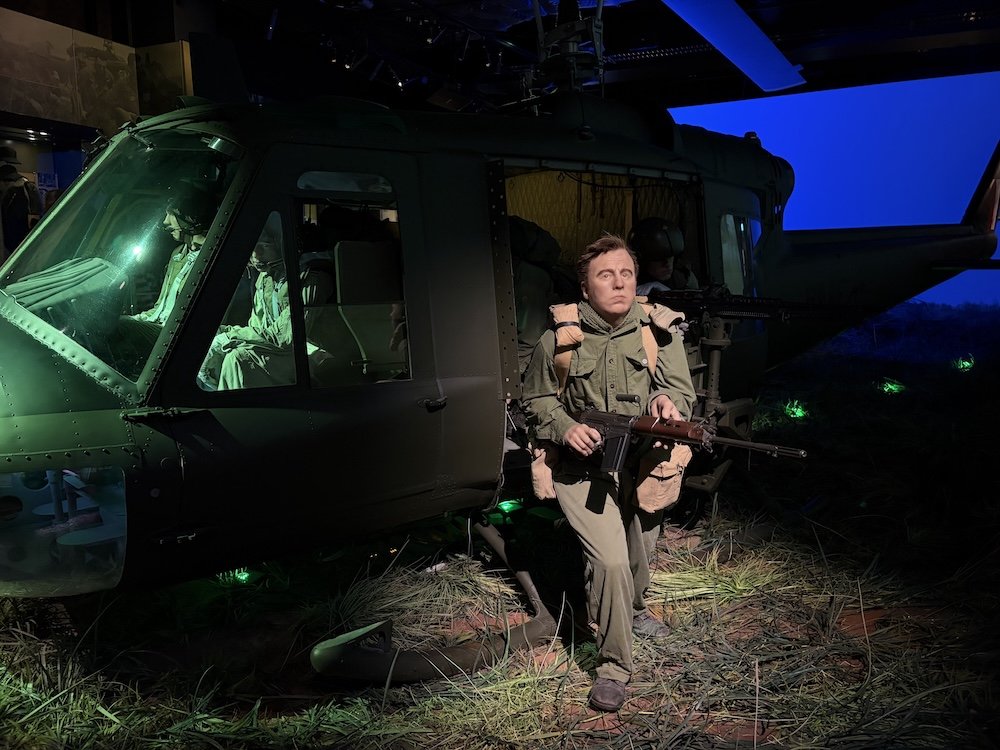
Last month my husband Dennis and I visited the War Memorial in Canberra.
The trip was for Dennis, who was conscripted during the Vietnam War, and has become increasingly focused on his Army days.
I was ambivalent.
As it turns out, the War Memorial is one of the most impressive museums I have ever visited. The displays are visually and aurally engaging. The staff are knowledgeable and passionate. The individual stories of combatants, nurses and innocent bystanders give the history an emotional resonance.
And, of course, amongst those individual stories were some incredible tales of courage.
Here I was, a writer of courage stories, surrounded by courage stories. So why did I feel so unsettled?
I have been pondering this over the last couple of weeks and am starting to understand the sources for my disquiet.
The Courage We Honour – The Courage We Ignore
First, while it is wonderful that the individual stories of courage are recognised and remembered, the narrow focus on wartime courage felt uncomfortable.
So much money, emotion and cultural storytelling has been invested in our memories of war.
I do understand, and honour, the promise that “we shall remember them”.
But what about the many other forms of courage that are hardly recognised at the time, let alone memorialised by our society?
Where’s the statue to the mother who cared for a disabled child for forty years?
Where’s the eternal flame for the man who overcame addiction and rebuilt his life?
Where’s the Roll of Honour for those who stood up against racism?
Courage Doesn’t Promise a Happy Ending
My second reason for discomfort is more challenging.
The stories of courage I discovered at the War Memorial were soaked in loss.
I started the Finding Courage project in the belief that courage is the secret to living your best life and creating a better society. I’ve written my stories in a format that demonstrates the positives of acting with courage.
Suddenly, I was face-to-face with the fact that being courageous might mean you die.
Running onto the battlefield to rescue a mate could get you shot. Having the courage to stay the course as a POW would likely scar you mentally for life.
And, of course, having the courage to start a new business could lead to your bankruptcy. Having the courage to cross the floor as a parliamentarian could lead to political isolation and loss of your job.
Obvious, I know. But it shocked me, nonetheless.
Courage Doesn’t Take Sides
My mind then took things one step further. Could courage be demonstrated by those with whom I morally disagree?
It probably took courage to be a bank robber. I suspect courage was required for young Muslim men and women to leave Australia and join ISIS. I imagine members of the mafia display courage to protect their families and syndicates.
And yet, all of these things I find morally repugnant.
I started this project very clear that courage wore a white hat. It was inherently good. The idea that courage might be morally neutral didn’t occur to me.
Rethinking What I’m Actually Doing Here
That one visit to the War Memorial has led me to rethink the Finding Courage project.
I still believe that courage is critical to living your best life. I still want to chronicle how courage can transform lives.
But the risks need to be acknowledged. The courage demonstrated by those with whom I disagree must be conceded. The bravery of those whose courage did not result in a happy ending needs to be honoured.
This can no longer be a “motivational” project written with naivety and idealism.
Finding Courage must be a witness to courage: seeing and recording courage where it exists, regardless of the motivation or the outcome.