
Following Your Inner Compass
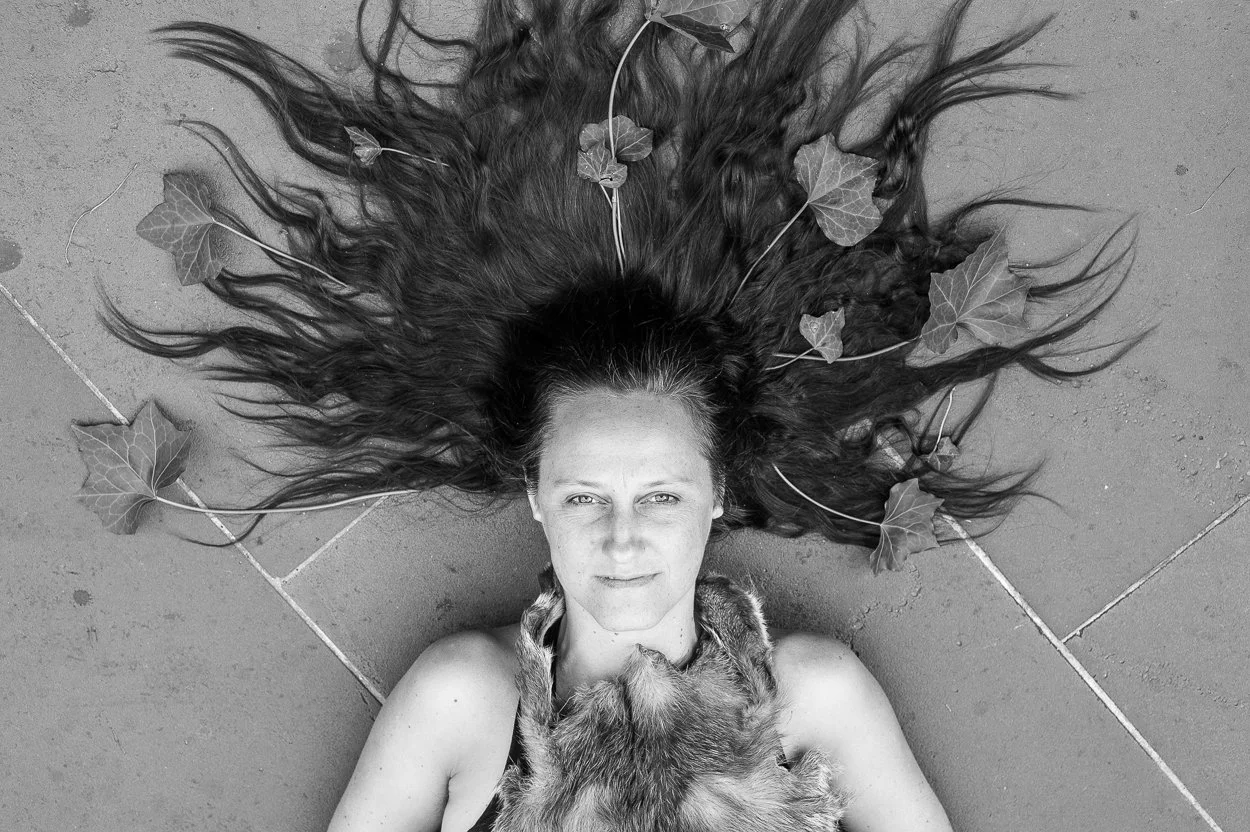
Credit: Jac Price Photography
Claire Dunn has walked away from certainty more than once — leaving activism, living wild for a year and reshaping her work and family life. What others saw as reinvention, she experienced as simply following her inner compass.
NOMINATION
Susie Russell (69) has been an activist since high school, and has been protesting, lobbying and organising to save Australian native forests for more than 30 years.
To me, courage is doing what you feel is right, even when your peers are going in another direction. To be able to stand up to the group and to say, “I’m sorry, I’m not going along with that. I choose to forge a different path.”
That’s what I find so courageous about Claire.
When she feels called to do something else, she can put down what she’s doing, leave her support group and break new ground.
She’s done it time and time again.
I first met Claire in about 2000. We were trying to get younger people involved in our campaigns, and this young fellow Daniel, turned up with his girlfriend, Claire, who was quite shy. For a long time, he was the one doing all the activism, and she was in the background.
At that time, we were trying to do things in a less confrontational way and looking for young women to step up. We encouraged Claire to be the spokesperson for an action on the Central Coast. It was way out of her comfort zone, but she did it. As she stepped into that leadership role, she became increasingly empowered and more articulate. When we asked Claire to run a campaign to save an area of forest on the Central Coast, she did all of that, and in 2003, those forests were protected.
After that win, she decided that her path was somewhere other than being an activist. For me, there was a sense of personal loss. You just get a really good one, and they go off and do something else. But in hindsight, I can see it’s what she needed to do.
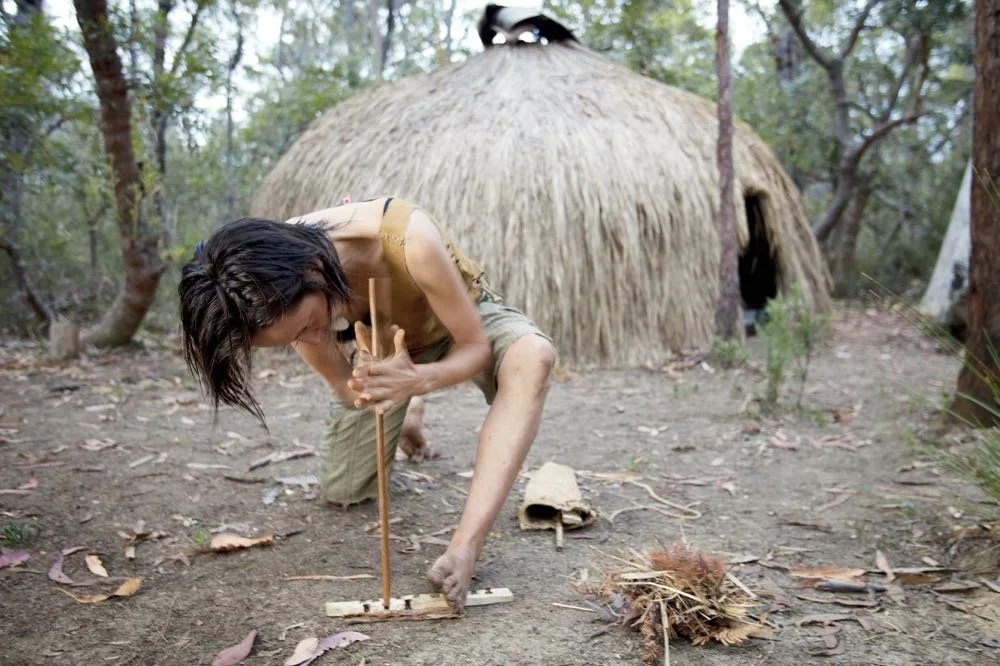
When she left us, she travelled around the world, including doing a camel trek across the desert in Syria. She became interested in primitive skills and went to Tom Brown’s Tracker School in the US, where she learned how to track, make fire by friction, and build a shelter. She was quite turned on by that.
When she came home, she decided to spend a year in the bush on her own living by using those skills.
Credit: Australian Geographic
When that was over, she was called to break new ground again…moving from the bush to the big city of Melbourne. She wrote a book about her experience living in the bush called My Year Without Matches, and then founded Nature’s Apprentice, offering courses to help urban people build a connection with nature.
While she was busy doing all of that, she met Dan (a different one) and became pregnant. Not long after, Dan’s former partner and the mother of their two children died from an aggressive cancer. Claire had had a lot of trouble with her own fertility and assumed she would never have kids. Then, quite late in life, she found herself a mother of three. The way she’s managing that, while managing everything else she is doing, is amazing.
Claire is still shy, but she has a strength and steadiness that helps people to dive into new ways of thinking and do things they wouldn’t have otherwise.
Over the last few years, Claire has been helping me to connect with nature in new and healing ways. She’s given me tools to build my own connection and resilience in hard times that might otherwise have led to depression. Now we’re discussing how we can collaborate to further her nature connection work.
Years ago, I was disappointed when Claire left forest activism. But Claire’s courage in forging her own path is now enabling me to make my path more meaningful.
CLAIRE
My love of nature began growing up in the Hunter Valley, where my parents owned a nursery. We were outdoors a lot, and I had a big tribe to run around with. I developed an affinity for wild places and wild creatures from an early age.
That connection wasn’t really cultivated or encouraged. Ours was a “sporting family”, with quite conservative values that celebrated productivity and achievement. My interest in books, creative writing and more mysterious things meant I often felt unseen at home. I was a pretty self-contained kid.
It wasn’t until I got to university that I was exposed to ecological crisis and collapse: the threat to those wild creatures and places I loved. That realisation birthed a whole new identity for me. I became involved in student environmental activism.
When I met Susie, I was drawn to her absolute commitment and fierce, grounded, action-oriented way of being in the world. We’d go and stay with activists who were living off grid, in these weird bush places, exposing me to alternative ways of living.
The more involved I became, the further I drifted from my family’s values. I was supposed to become a journalist. Instead, I turned away from a conventional career and threw myself into activism, flying in the face of everything my parents had instilled in me.
Despite our successes, I started to lose faith in activism, seeing that it was never going to get to the root cause of our problems: Western culture’s profound disconnection from the natural world. I felt compelled to move toward healing that rift.
So I walked away from my “family” again, leaving the identity, the community and sense of belonging I had found in activism.
It was one of the most heartbreaking and difficult decisions of my life.
I felt a spiritual calling propel me on a multi-year journey of exploration. (Although I wouldn’t have called it that at the time – activists don’t really talk about spirituality.) I studied as much as I could about earth skills, indigenous wisdom, spiritual experiences, vision quests, deep nature connection and ecological literacy. Once I started, there was no going back. I was so enthralled by this profound way of being and living in connection with nature.
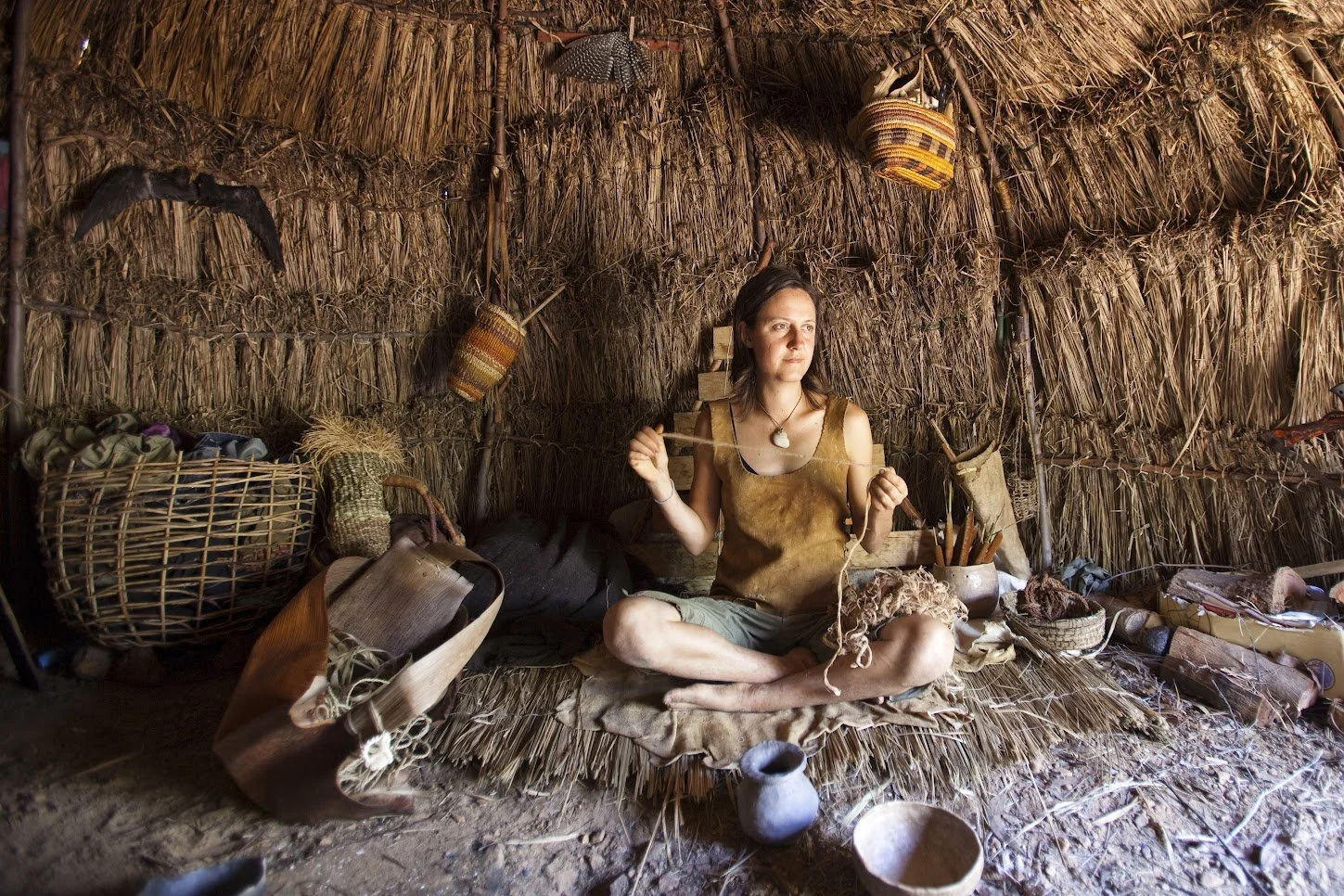
I did several solo treks and decided I wanted to do a year living wild. I heard about a program in the US where you build your own shelter and live in it for a year, and I thought, “I absolutely must do that.” But I wanted to do it in Australia amongst my own plants and animals. So I helped to organise Australia’s first Independent Wilderness Studies Program, in which six people spread across a large uninhabited property, and lived wild for a year.
I was quite fierce about it, taking very little with me, committing myself to only lighting fires by rubbing sticks together and spending months completely on my own.
Credit: Australian Geographic
I shed layers of social identity. I had gone into the year expecting to master skills and tick various goals off my list. I discovered there was no such thing as mastery of skills, just engagement with them. My “goals” were not compatible with the spaciousness and simplicity of my life. I was re-oriented from seeing my worth in my achievements, to realising my worth was in my being.
At the end of that year, I felt dismantled and needed to rebuild a sense of who I was at an essential level.
I felt compelled to write about my time in the wild, and that proved crucial to integrating the experience. So much was just visceral at the time. It wasn’t until I started to write about it that I saw the full arc of the experience and clarified what I really felt.
My Year Without Matches was a surprise success. I had moved to Melbourne by then, and suddenly I was flying up to Brisbane to be on the Richard Fidler show. After years as a lone wolf, I felt like a deer in the headlights. But the media attention allowed me to speak passionately about the need to reconnect with the wild way of being. I came to see myself as a bridge between the wild world and the civilised world.
And then came the requests for workshops and retreats. I still felt the wild strongly inside me, and I think people sensed that. There was a yearning, almost a clawing at me to give them a piece of it. I just kept saying yes, and from that came my business, Nature’s Apprentice. For the past 10 years I’ve been helping people reclaim ancestral life ways, rediscover nature and their “wild”.
Credit: Jac Price Photography
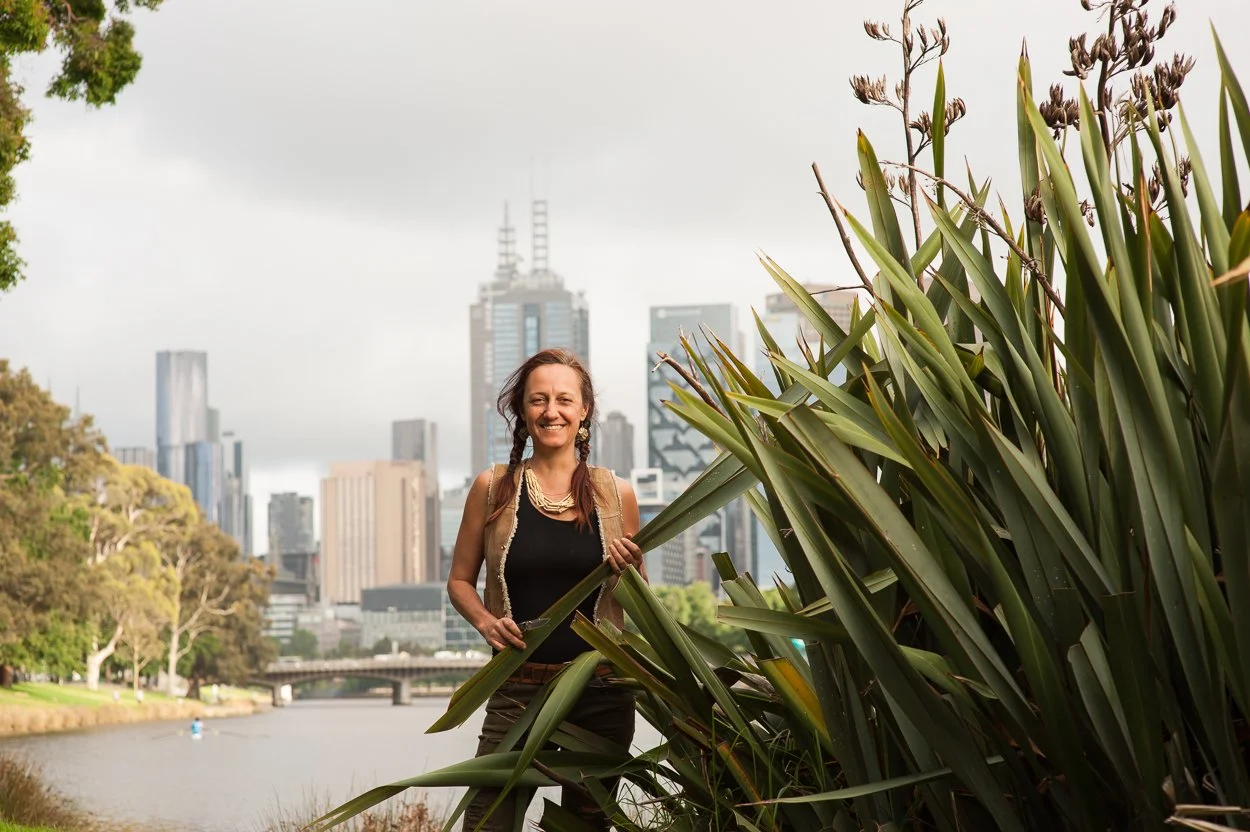
I wanted to put roots down in Melbourne rather than perch on the edge, ready to leave again at any moment. To do that, I had to find ways to keep my relationship with the wild world in an urban space. So I researched and wrote my next book, Rewilding the Urban Soul. I came to see the importance of “village” and found ways of relating to people and culture that overlapped with my nature-based practice. Have a fire by the river together, find sit-spots together, make herbal medicines together.
In all of that, I met Dan, who had two young children, and got pregnant myself.
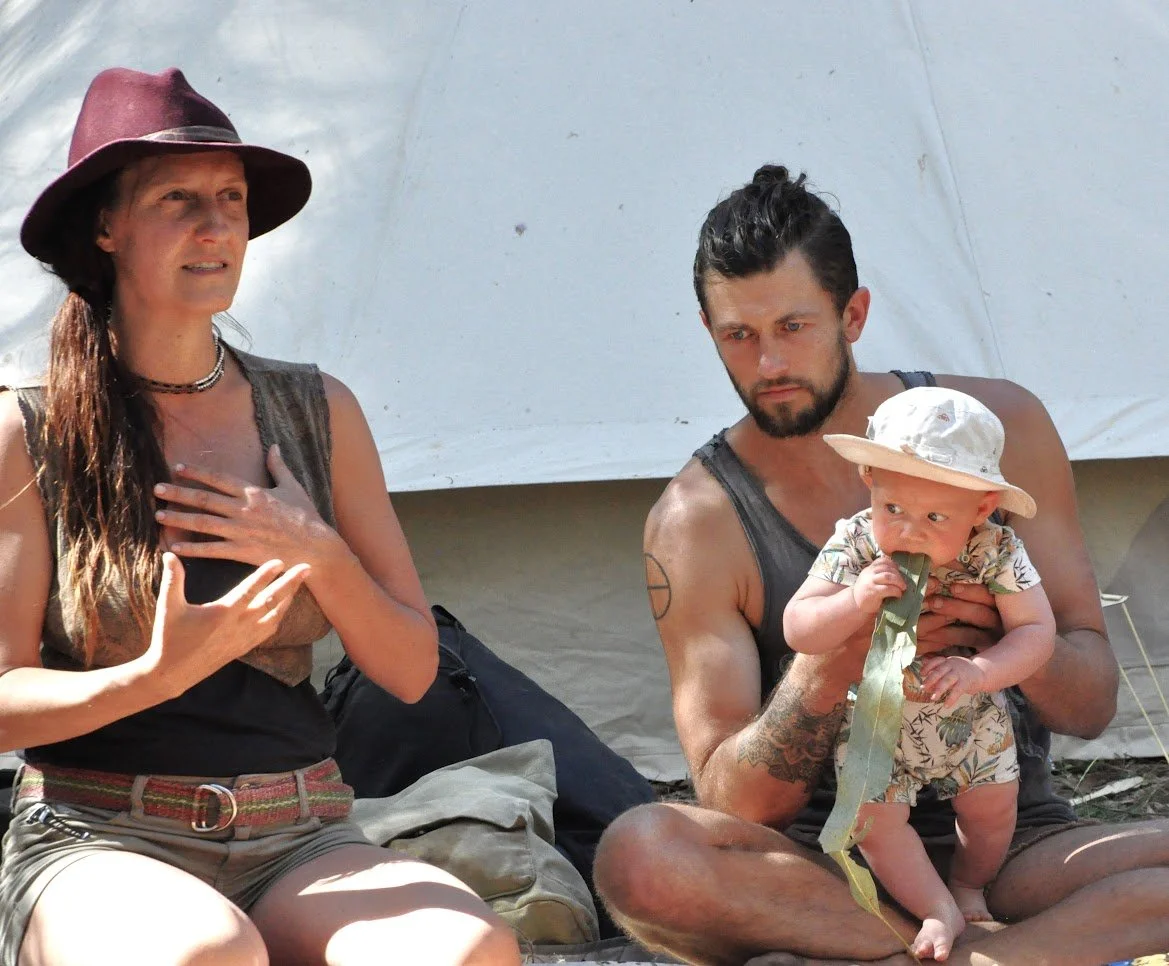
At the age of 43, I went from being a sole operator to being fully enmeshed in a family of five almost overnight. Another entirely new path.
Credit: Michael Smith
And now I’m preparing for another big change, shifting Nature’s Apprentice from a sole trader business to a non-profit organisation. I’m grappling with letting go of complete control of what has been mine alone for the last 10 years. It’s scary.
Every time I’ve shifted direction or done something out of the ordinary, it has felt like something difficult, even heartbreaking, that I’ve had to do.
In hindsight, I can see that I’ve been courageous, but I was really just following an inner compass bearing.
I do remember one day when I was writing My Year Without Matches, I was struck with a wave of self-doubt and anxiety. I struggled to believe that my story was worth reading. I was terrified of making myself so exposed. And I remember thinking, “If I can garner enough courage to finish this project, then I can do anything.”
I think I was right. Writing that first book took more courage than anything else I’ve done. And facing that fear has given me the self-confidence to discern what’s mine to do and have the inner conviction to just move ahead.